


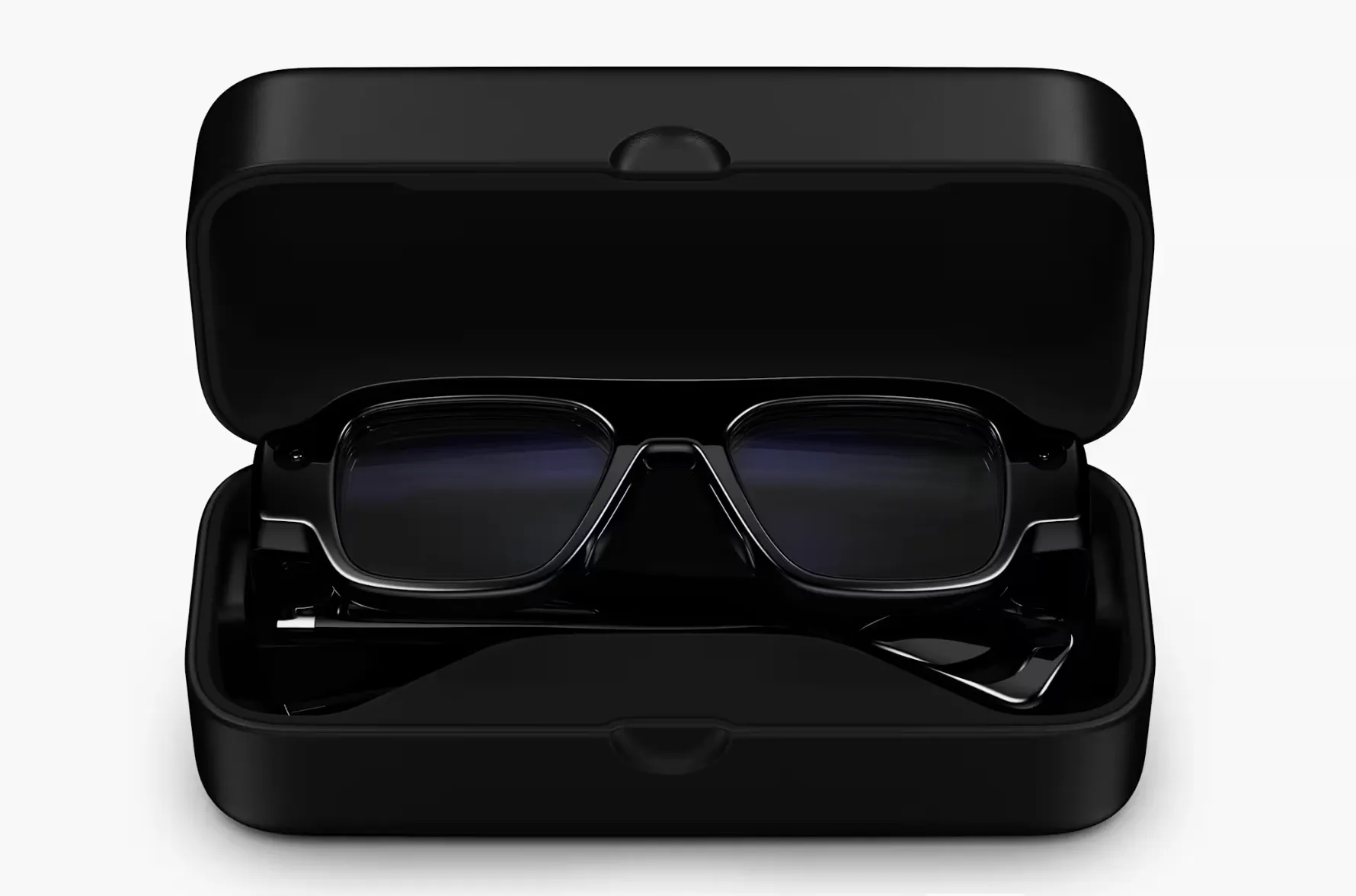
When two Harvard students built I-XRAY—a system that combines Meta's Ray-Ban smart glasses with facial recognition and public databases to instantly reveal anyone's personal information—they deliberately chose not to release it publicly. Instead, they created a guide for removing yourself from the data brokers that made their project possible. That decision captures the fundamental tension we're facing: the technology to surveil is already here, but the social frameworks to handle it aren't. Now, as Apple prepares its own smart glasses entry, a new detection app called Nearby Glasses offers a glimpse of what privacy-by-design could look like—and what Apple needs to get right from day one.
The stakes are clear. Reports of stalkers and harassers repeatedly using Meta's Ray-Ban glasses to record others without consent have sparked enough concern that developer Yves Jeanrenaud felt compelled to build detection software. This isn't just about one company's product—it's about an entire category of wearables that blur the line between helpful tech and invasive surveillance. For Apple, which has staked its reputation on privacy features like App Tracking Transparency and on-device processing, the challenge is building glasses that deliver on AR's promise while respecting the boundaries that make people comfortable wearing them in public spaces where social norms around recording haven't yet solidified.
How Bluetooth detection actually works (and where it falls short)
The Nearby Glasses app operates by scanning for distinctive Bluetooth signatures that smart glasses broadcast when active. Most smart glasses maintain constant Bluetooth connections to sync with smartphones, and the app cross-references detected signals against a database of known smart glasses signatures, allowing it to differentiate between regular Bluetooth devices and potential recording equipment. Think of it as the difference between a one-time manual scan and continuous monitoring—the app runs in the background maintaining real-time awareness, rather than requiring users to actively check their surroundings.
The technology works similarly to how your phone discovers nearby headphones or speakers, but with a crucial refinement. When you open your phone's Bluetooth settings and see a list of available devices, you're performing a one-time manual scan. Nearby Glasses takes this further, operating like having a security camera running 24/7 instead of glancing around a room once. It specifically identifies the unique Bluetooth signal given off by Meta's Ray-Bans and others, filtering out your colleague's wireless earbuds while flagging that person across the coffee shop who might be wearing recording-capable eyewear. When the app detects a potential pair of glasses in the local area, it sends a push alert to notify you.
But here's where the technical limitations become critical: false positives can occur from VR headsets, fitness trackers, and smartwatches that share similar Bluetooth characteristics. In testing environments, devices with overlapping Bluetooth low-energy profiles and similar service UUIDs trigger alerts roughly 15-20% of the time. That's not just an accuracy problem—it's a trust problem. When your detection app cries wolf one in five times, people stop paying attention to the alerts that actually matter. This echoes the challenge faced by early smoke detectors: nuisance alarms train users to ignore genuine warnings.
The platform fragmentation compounds these issues in ways that directly affect who gets protection. Nearby Glasses is currently available on the Google Play Store and GitHub, but iOS users face significant limitations due to Apple's privacy-focused approach to Bluetooth access—an ironic twist where Apple's existing privacy protections create gaps in this new form of privacy defense. While Android allows more continuous background monitoring, iOS requires apps to request permission for each scan or operate only when actively open, creating substantial gaps in detection coverage. And perhaps most critically: users may miss detections entirely if smart glasses have Bluetooth disabled or are in airplane mode. The app is effective mainly against casual users who aren't thinking about concealment—not someone deliberately attempting covert surveillance.
This reveals a fundamental asymmetry: defensive tools require cooperation from the very devices they're trying to detect. It's like trying to build a burglar alarm that only works if burglars remember to wear bells.
PRO TIP: Open your Bluetooth settings in a crowded coffee shop and observe how devices identify themselves. Notice the patterns—headphones often include manufacturer names, fitness trackers broadcast specific service profiles. This is the same principle detection apps use, but they're running these scans continuously in the background rather than waiting for manual checks. Understanding these patterns helps you grasp both the potential and the limitations of Bluetooth-based detection. You'll quickly see how many devices are constantly broadcasting around you, which illustrates why filtering signal noise becomes so challenging for detection apps.
What Meta's approach teaches us about privacy missteps
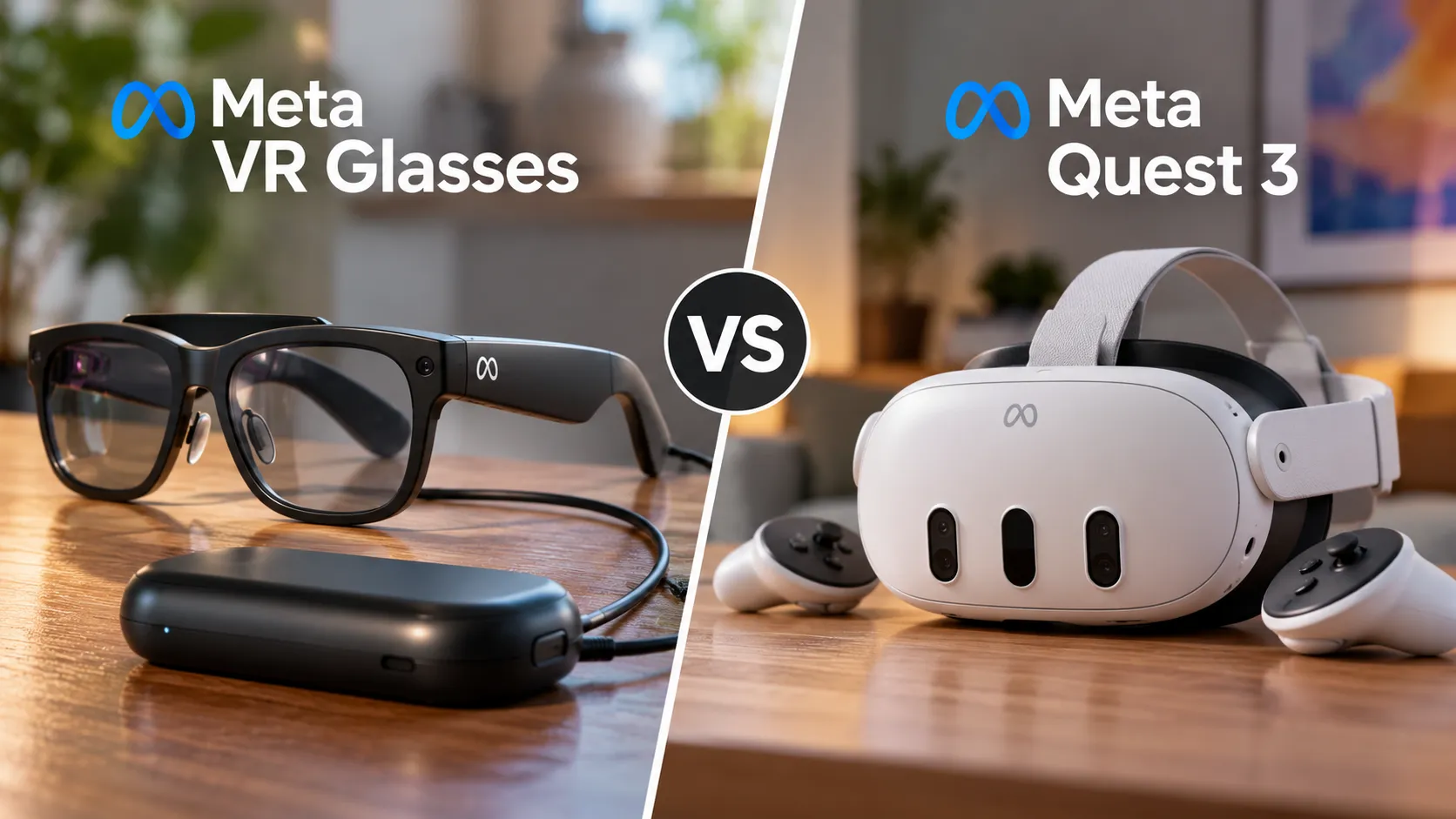
Meta's Ray-Ban smart glasses have become the cautionary tale that Apple needs to study carefully. The hardware itself isn't inherently problematic—recent AI enhancements enable users to gather information about their environment and receive reminders about parking locations, with video capabilities providing ongoing, real-time assistance. The issue is what happens to the data captured by those cameras—and more importantly, who consented to being part of that data stream.
Meta has officially stated that images or videos users request to analyze on the Ray-Ban Meta smart glasses "may be used" to train their artificial intelligence. The company clarifies that photos and videos taken with the glasses won't be utilized for AI model training unless users choose to submit them, but there's a catch: in regions where multimodal AI is accessible (currently the US and Canada), images and videos shared with Meta AI may be employed to enhance it in accordance with their Privacy Policy.
Let's be clear about what this means in practice. Meta is recognized for utilizing public posts from its social media platforms, such as Facebook and Instagram, to train its artificial intelligence. When promotional videos demonstrated the glasses assisting users in selecting outfits by providing a view of their closet, those visuals would naturally encompass the interior spaces of the user's home. And Meta's privacy policies indicate that all audio transcriptions collected through the glasses are retained for AI training purposes, though users can opt out—a choice that places the burden of privacy protection on individual vigilance rather than thoughtful default design.
This data collection approach fundamentally misses the point of what makes smart glasses concerning. It's not just about the wearer's privacy—it's about everyone else who gets captured in those recordings without consenting to have their image, their conversations, their private moments fed into an AI training pipeline. When you're wearing smart glasses in a coffee shop, should the stranger at the next table need to know about Meta's data retention policies and opt-out procedures? That's the privacy violation that sparked the creation of detection apps in the first place, and it's the exact problem Apple has the opportunity to solve through architectural choices rather than policy disclaimers.
The legal landscape is messier than you think
Recording consent frameworks were designed for scenarios where all parties could clearly see recording equipment—smartphones held up, video cameras on tripods, visible security systems. Smart glasses break that fundamental assumption, and the legal system is struggling to catch up because the technology has evolved faster than the legislation meant to govern it.
The jurisdictional patchwork creates genuine compliance challenges for manufacturers and users alike. California generally permits recording in public spaces while requiring two-party consent for private conversations where there's a reasonable expectation of privacy, while Massachusetts extends two-party consent more broadly to include video recordings in certain contexts. Meanwhile, the European Union's GDPR adds another layer entirely, treating persistent video capture as potential personal data collection requiring affirmative consent regardless of public setting.
What's legal in one state or country becomes a violation in another, and smart glasses exist in this awkward space where the technology has raced ahead of both social norms and legal frameworks. A business traveler wearing Apple Glass could unknowingly violate recording laws simply by crossing state lines or international borders with the device active. That's precisely the regulatory gap Apple needs to address through design choices—perhaps geofencing that adjusts recording capabilities based on location, or mandatory disclosure screens that adapt to local legal requirements—rather than waiting for legislation to catch up.
But here's where it gets genuinely complicated: "I consider it to be a tiny part of resistance against surveillance tech," developer Yves Jeanrenaud told 404 Media about his detection app, yet detecting someone's device could be viewed as an invasion of their privacy even while attempting to protect one's own. Consider this scenario: You're wearing smart glasses for legitimate accessibility purposes—live captioning for hearing impairment, for instance. Someone nearby runs a detection app and confronts you about "recording them without consent." Who has violated whose privacy? The person potentially capturing video, or the person scanning your personal devices without permission?
This paradox reveals why technical solutions alone can't solve social problems. We need glasses that broadcast their recording status in machine-readable formats that detection apps can parse, creating a cooperative privacy ecosystem rather than an adversarial arms race. Apple's ecosystem control gives them unique leverage to establish this standard from launch, rather than retrofitting it years later after social norms have already calcified around less privacy-respecting approaches.
What Apple Glass needs to get right from launch
The I-XRAY project demonstrates exactly what Apple needs to prevent. Harvard students AnhPhu Nguyen and Caine Ardayfio combined Ray-Ban Meta smart glasses, face search engines, LLMs, and public databases to create a pair of glasses that reveal to the wearer anyone's personal details—home address, name, phone number, and more—just by looking at them. The students used facial recognition models similar to PimEyes and FaceCheck for reverse facial recognition, with the technology matching faces to publicly available images online and scouring the URLs.
The students stated they do not intend to make the app publicly available and only developed it to highlight the risks of an AI-enabled wearable device that can discreetly record people. Instead of releasing the technology itself, they documented how people can remove themselves from the databases that made it possible. That's the responsible approach—but it shouldn't be necessary if manufacturers design these devices correctly from the start. The burden of privacy protection shouldn't fall on individuals learning how to navigate data broker opt-out procedures.
Here's what privacy-by-design actually looks like for smart glasses: visible, unmistakable recording indicators that can't be disabled or obscured. Not a tiny LED that's easy to miss or cover—something that makes it immediately obvious to everyone nearby when the camera is active. Think of the magnetic charging sound AirPods Max make, or the startup chime of a Mac: distinctive, deliberate auditory cues that signal device state changes. Apple Glass could emit a subtle but recognizable tone when recording begins, something that works even when the glasses are outside your field of vision.
On-device processing that keeps visual data local rather than streaming it to cloud servers for AI analysis. Apple's already proven this approach with Face ID and Photos app intelligence—the same architectural principles should extend to smart glasses. Explicit consent frameworks built into the OS that make it technically difficult to capture images of people without some form of notification. Perhaps a Bluetooth Low Energy broadcast that says "Apple Glass nearby - Recording: Active" that any smartphone can detect and display, creating transparency by default rather than requiring third-party detection apps.
And perhaps most importantly: no automatic facial recognition, no integration with people-search databases, no AI training on captured footage without explicit, granular consent from everyone who appears in it. Apple should implement hard technical barriers—not just policy restrictions—that prevent I-XRAY-style applications from ever running on their platform. This might mean restricting camera API access in ways that make continuous facial recognition technically impractical, or building mandatory processing delays that prevent real-time identification.
The Nearby Glasses app exists because manufacturers haven't built these protections into the hardware and software. The app was developed after reading coverage of how people are using Meta's Ray-Bans to film people without their knowledge or consent, demonstrating how grassroots technical responses can emerge from public discourse about surveillance. That's a market signal Apple should heed: people want these devices, but they want them built with privacy as a core feature, not an afterthought. The fact that someone felt compelled to build a detection app tells you everything you need to know about the trust deficit current smart glasses have created.
Why this moment matters for AR's future
Detection apps are interesting as a technical solution, but they're really just a symptom of the larger challenge we're facing as recording devices become invisibly integrated into everyday objects. The emergence of these apps highlights growing tensions between technological capability and social norms around recording, tensions that Apple has the opportunity to address through thoughtful product design rather than leaving it to third-party developers to patch after the fact.
What makes this moment particularly critical is timing. Apple Glass will likely launch into a market where Meta has already established user expectations and social precedents—some positive, many problematic. If Apple simply follows Meta's approach with slightly better marketing, they'll inherit the same trust deficit and social friction. But if they fundamentally rethink what privacy-respecting smart glasses look like, they can reset the category's trajectory before negative perceptions become permanent.
The question isn't whether we can detect smart glasses today, but whether we can build a society where we don't need to. That's the standard Apple should be aiming for with its glasses—not just meeting minimum legal requirements, but setting a new baseline for what privacy-respecting AR wearables look like. The company that convinced people to trust Face ID and built app tracking transparency into iOS has the credibility to define what responsible smart glasses should be. They've shown they can make privacy features that users actually understand and appreciate, rather than burying protections in settings menus nobody reads.
The path forward isn't about choosing between innovation and privacy—it's about recognizing that long-term adoption of AR wearables depends on building both simultaneously. Nearby Glasses and I-XRAY aren't competitors to Apple Glass; they're warning signs about what happens when privacy becomes an afterthought. Apple has the chance to learn from Meta's missteps and build something that people actually want to wear in public, and that others feel comfortable being around. That's the real innovation opportunity here: proving that wearable cameras can coexist with social trust, that AR enhancement doesn't require surveillance, and that the future of computing can respect human dignity instead of eroding it. Get this right, and Apple doesn't just launch a product—they establish the ethical framework for an entire category of technology that will shape how we interact with the world for decades to come.



Comments
Be the first, drop a comment!